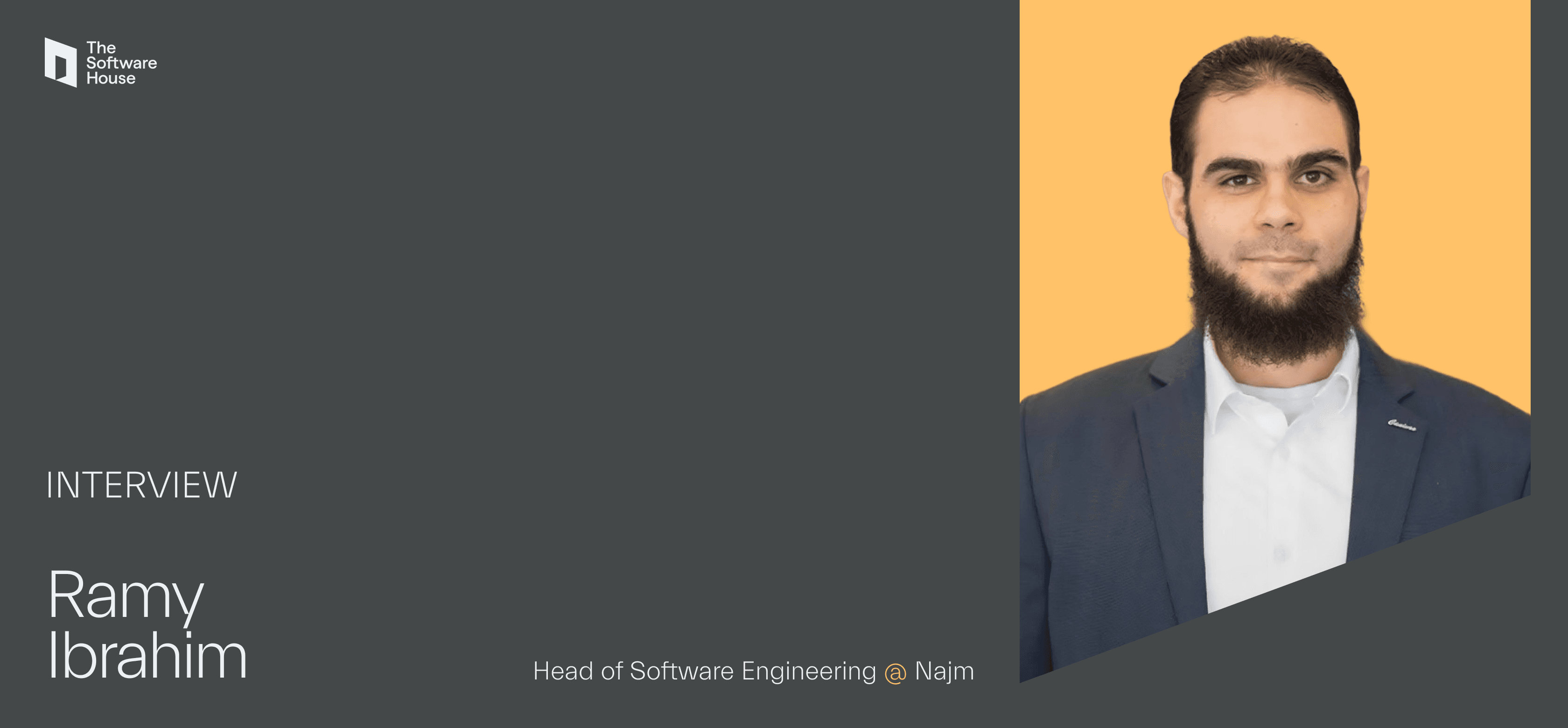

From modernizing 400+ systems to leading distributed teams of 100+ specialists, Ramy Ibrahim shows how engineering leadership grounded in planning, culture, and technical depth can unlock transformation at scale.
Ramy's track record proves that resilient systems and motivated teams are as critical as new technologies in achieving Vision 2030’s goals.
The Voices of Vision 2030 series highlights how Saudi tech leaders break away from the status quo to drive innovation, unlock growth, and help realize the Kingdom’s vision for a thriving digital future.
Turning software complexity into measurable business results
As Saudi Arabia advances its Vision 2030 ambitions, software engineering maturity is proving to be the real driver of transformation. Ramy Ibrahim, Head of Software Engineering at Najm, shares how strategic planning, hybrid teamwork, and a culture of innovation turned complexity into measurable results.
In this interview, Ramy:
Explains why investing 20% in upfront planning saves 80% of implementation effort,
Shares how he managed 100+ specialists across distributed teams while boosting employee satisfaction by 40%,
Reveals the practices that cut costs by 15% and increased delivery by 50% without compromising quality.
About Ramy
You completed your MBA at the Swiss School of Management two years ago and even celebrated graduation in Rome. Congratulations! What experience from the program has stayed with you the most?
Ramy Ibrahim: Thank you. It was an amazing experience. I had actually been preparing to pursue this MBA for almost a decade. What stayed with me the most was how it helped me bridge business and technology. That alignment is crucial for driving successful digital transformation. I learned how to approach concepts like TCOs and ROIs, conduct cost-benefit analysis, and, equally important, how to connect and communicate effectively with C-level stakeholders.
Software Engineering as the Backbone of Transformation
Many leaders say software engineering maturity is the real backbone of digital transformation. From your perspective, how do you bridge the gap between business strategy and technical execution?
Ramy Ibrahim: That’s a great question. Every technology is ultimately driven by business needs, so aligning the two is essential for digital transformation. My approach combines strategic thinking with hands-on technical expertise. I focus on translating business objectives into measurable technical outcomes through cost-benefit analysis, while keeping a continuous dialogue between C-level stakeholders and engineering teams.
In many ways, my role is that of a mediator. Turning business strategy into actionable technical items. I often use the language of TCO and ROI to frame decisions, which helps executives quickly grasp the impact and make informed choices.
Modernizing over 400 systems and building dozens of new ones must have come with huge lessons. What stands out to you about designing architectures that can scale and adapt as business needs evolve?
Ramy Ibrahim: It’s definitely one of the trickiest parts of my role because complexity needs to be constantly demystified. It starts with understanding business requirements very carefully and then aligning them with architectural standards and non-functional requirements such as performance, scalability, and resiliency. From there, we choose the right technologies and patterns.
For example, sometimes a modular monolith is a better fit than microservices if the added complexity doesn’t serve the business case. In other cases, we apply event-driven models, pub/sub, or outbox patterns to ensure resilience and avoid message loss in mission-critical systems.
The key is to invest upfront: 20% of thoughtful planning can save 80% of effort during implementation.
I also believe digital transformation is as much cultural as technical. We built a framework around people, process, and technology. That meant setting KPIs for each phase, maintaining a clear RACI matrix, engaging 120 team members across multiple countries in hybrid models, and continuously aligning with stakeholders. Along the way, I worked with technologies like Google Apigee, RabbitMQ, .NET, OutSystems, GraphQL, Angular, and more.
Looking ahead, I see enterprise architecture moving toward intelligent, autonomous systems:
AI-powered platforms automatically scale, self-heal, optimize performance, and predict failures.
Event-driven architectures will become the norm, enabling actual real-time business.
And the shift from “infrastructure as code” to “business logic as code” will make it possible to adapt business rules instantly, delivering agility while keeping technology invisible to the end user.
You said big transformation programs often involve a mix of in-house teams and external vendors. How do you work around this?
Ramy Ibrahim: The pandemic was a turning point. It taught us that teams don’t have to be physically together to work effectively. Since then, I’ve managed augmented teams across multiple countries, and while that comes with challenges, it’s manageable with the proper structure.
Setting clear KPIs, defining a RACI matrix, and ensuring everyone feels connected and enabled are critical. At the end of the day, we look for both technical skills and the right attitude, and we go through a rigorous interview process to build the right mix.
On the vendor side, I consider it both a technical and strategic decision. We evaluate options using frameworks like SWOT analysis, total cost of ownership, and build-versus-buy assessments while ensuring key stakeholders are involved from the start. Proof-of-concepts play a big role, too, as they help us test assumptions before making major commitments. This approach ensures the solution fits technically, scales with the business, and remains cost-effective.
How do you keep everyone aligned and delivering to the same standard?
Ramy Ibrahim: By setting clear standards and measurable KPIs. Everyone knows exactly what’s expected, which removes confusion and drives results.
I also rely on a structured hierarchy to manage 100+ specialists across roles like backend, frontend, mobile, database, and DevOps. Combined with a strong culture and code of conduct, this keeps the team moving in the same direction.
Edge cases happen, but when they’re rare, they’re easy to correct.
DevOps, Cloud & Technical Debt
You hold multiple certifications across microservices, DevOps, and cloud. How have you seen these practices accelerate transformation when applied at scale?
Ramy Ibrahim: These practices are inevitable because real needs created them. It always starts with careful planning: understanding the organization’s current capabilities, budget, and appetite for open-source versus enterprise solutions.
From there, it’s choosing the correct design pattern and technology for the job, whether that means RabbitMQ or Kafka for event-driven systems, or selecting between AWS, Azure, Google Cloud, or Oracle. Even on the mobile side, the decision between native or cross-platform frameworks like Flutter has to align with business priorities.
We formed a design advisory committee with stakeholders from across teams to make these choices effectively. This collective approach ensures decisions are accurate and balanced before we move forward with major initiatives.
On a practical level, microservices and cloud-native architectures have been game changers. We’ve used event-driven models, containerization with Docker and Kubernetes, and modularized systems to scale individual components independently, improve resiliency, and speed up deployments. This makes responding quickly to market changes easier while reducing the risks of monolithic systems. That said, you must always watch out for data consistency challenges when working with microservices.
Finally, I believe continuous learning is essential. The half-life of technical skills is shrinking, so I keep certifications across architecture, DevOps, cloud, and fintech. A technology leader must understand the strategic frameworks and the hands-on details. Otherwise, they risk becoming an obstacle to innovation.
Looking ahead, what emerging technologies do you believe will have the biggest impact on software engineering in the next five years?
Ramy Ibrahim: Several technologies will reshape our industry:
Serverless computing and Function-as-a-Service will change how we think about application architecture.
Edge computing will enable real-time processing closer to users.
No-code/low-code platforms like OutSystems will democratize application development.
Quantum computing will eventually transform cryptography and complex problem-solving.
Advanced AI will automate more aspects of the software development lifecycle, from code generation to testing and deployment.
Speaking of AI, what role do artificial intelligence and machine learning play in your digital transformation strategy?
Ramy Ibrahim: AI and ML are becoming fundamental drivers of digital transformation, especially regarding data-driven decision-making and process automation. My main focus has been on building the infrastructure and architecture that make AI/ML adoption possible. Still, I’ve already applied them in areas like OCR and AI-powered support agents.
I’m exploring ways to use AI to reduce technical debt and improve engineering productivity through automated code reviews, code completion, and even coding agents. The goal is to accelerate development and to raise the bar for quality across the entire software lifecycle.
One of the paramount aspects of digital transformation is cybersecurity. How do you integrate security into your development processes?
Ramy Ibrahim: Security can never be an afterthought; it has to be built into the process from the start. For us, that means adopting a DevSecOps approach. We integrate security directly into our CI/CD pipelines with practices like static application security testing (SAST), dynamic application security testing (DAST), software composition analysis (SCA), and SBOM checks. These quality gates catch vulnerabilities early and ensure we deliver secure code without slowing development.
On the infrastructure side, we use zero-trust environments and micro-segmentation to harden systems as much as possible. Nothing is ever 100% bulletproof in cybersecurity, but by embedding security into every stage of development, we get as close as possible while keeping delivery cycles fast and reliable.
How do you decide when to prioritize quick delivery and when to address technical debt?
Ramy Ibrahim: This is one of the biggest balancing acts in software engineering. I’ve worked in organizations where the focus was purely on delivery, and others where quality engineering and technical debt were given equal weight.
In today’s environment, especially with the push of Vision 2030, there are so many initiatives with tight deadlines that delivery often takes priority. Our role as IT leaders is to balance the two so we don’t compromise the future for short-term wins.
To achieve that balance, we use different approaches. Sometimes, low-code platforms help us accelerate delivery without adding unnecessary complexity. Other times, AI-assisted coding boosts productivity with faster code reviews, completions, and feedback loops.
Never lose sight of technical debt. If you overinvest in it, you risk missing market opportunities; if you ignore it, you end up with weak, fragile systems.
One area where addressing technical debt early proved invaluable was in legacy system integration. We applied Application Rationalization, classifying systems into “Tolerate,” “Invest,” “Eliminate,” and “Migrate.” From there, we used the Strangler pattern to modernize modules step by step. This avoided a costly “big bang” replacement, reduced risks, and allowed us to modernize an entire system incrementally while still delivering value along the way.
How do you measure the success of digital transformation initiatives?
Ramy Ibrahim: Measurement is critical. We start by translating the corporate strategy into an IT strategy and then apply a balanced scorecard approach. That means combining business outcomes, like customer satisfaction, cost reduction, and revenue growth, with technical metrics such as system uptime, deployment frequency, and lead time.
The key is setting baseline metrics before the transformation begins and then continuously tracking progress.
We use automated dashboards to give stakeholders real-time visibility into how we’re performing. With this approach, we’ve achieved tangible results, like a 70% improvement in production stability and closing 60% of audit gaps.
Digital transformation is iterative, so we revisit these scorecards regularly, ensuring every improvement cycle is tied back to business value and technical excellence.
Engineering Culture & Talent
According to your track record, employee satisfaction in your teams has improved under your leadership. What practical steps helped you keep both morale and delivery outcomes?
Ramy Ibrahim: I value every software engineer, not just their skills, but their perspectives. When people feel their opinions matter, they unlock their full potential. I make it a point to listen to recommendations and ensure everyone feels like an essential part of the team.
I also rely on the Six Sources of Influence, a framework that looks at motivation and ability across three levels: personal, social, and structural.
At the personal level, it’s about wanting to do the work and having the skills to do it. At the social level, it’s about encouragement and support from peers.
We run collaborative code reviews and hackathons to strengthen team spirit and knowledge sharing. And at the structural level, it’s about creating an environment that rewards good work and provides the right tools.
This approach helped us increase employee satisfaction and retention by 40%.
Motivation rises naturally when engineers see their skills improving and their careers progressing. Morale and delivery thrive with clear structure, fair rewards, and a supportive environment.
How do you keep collaboration and culture strong when teams and vendors are distributed across remote and on-site settings?
Ramy Ibrahim: Remote and hybrid work didn’t weaken collaboration; it accelerated digital transformation by making teams more comfortable, accountable, and productive. The key is clear communication and simple trust-building habits.
Video calls, for example, aren’t just about meetings; they let people see each other’s expressions and reactions, strengthening connections. I also encourage personal touches, like greeting each other, asking about someone’s day, or sharing small experiences. These gestures may seem minor, but they add to a stronger team spirit.
Leadership Lessons from Transformation
You managed to reduce costs by 15% while increasing delivery by 50%. What leadership principles made that possible without compromising quality?
Ramy Ibrahim: Leadership isn’t about sticking to one style but adapting to the situation. Sometimes, you need to be directive and go straight to the point, while other times, it’s about listening, giving space, or showing passion. This flexibility creates better results than any single fixed approach.
Equally important is leading by influence. I focus on being a role model, keeping the team motivated, and fostering a sense of belonging. They give their best when people feel part of something they value, whether in the office or remotely. That culture of ownership and motivation made it possible to reduce costs and increase delivery without sacrificing quality.
Today, tech leaders are navigating a VUCA world (volatile, uncertain, complex, and ambiguous). What’s your advice for managing a large-scale project in that environment?
Ramy Ibrahim: Flexibility and adaptability are the two qualities that make survival and success possible in a VUCA world.
Big projects inevitably face shifting priorities and unexpected challenges, so leaders must break large problems into smaller, manageable pieces and apply agile techniques to handle them step by step.
At the same time, it’s about balance. You must adapt quickly when priorities change, but never lose sight of the strategic vision and KPIs. That keeps the team aligned and ensures short-term adjustments contribute to long-term goals.
It also involves smart decisions about technology investments and resource allocation. Leaders must manage dependencies and complexity without letting uncertainty distract them from business objectives.
Saudi Arabia’s Vision 2030
Vision 2030 calls for resilience, innovation, and competitiveness. What role do you see software engineering leaders playing in achieving these goals?
Ramy Ibrahim: Today, every company is essentially a software company. No matter the industry, daily operations now depend on systems and platforms rather than manual processes. That means software engineering is at the center of driving resilience, automation, and innovation.
For leaders, the role goes far beyond coding. We must provide quality engineering, build resilient systems, leverage data, and develop AI models that push automation to the next level. AI agents increasingly take on once manual tasks, further accelerating the transformation.
Software engineering is no longer just a support function; it’s becoming a core business differentiator. Leaders in this space must combine technical depth with business acumen, acting as problem solvers who understand market dynamics, customer needs, and competitive pressures.
The future lies in platform engineering and internal developer platforms that enable faster innovation across entire organizations.
How can Saudi engineering teams position themselves to not only follow global standards but also set new benchmarks in delivery and innovation?
Ramy Ibrahim: The future requires excellence. Engineering teams must move from building standalone applications to creating resilient, scalable, and secure ecosystems and platforms. This demands continuous innovation, strong collaboration, and leadership that brings out the best in people.
The key lies in efficiency. It means choosing the right problems to solve and executing them with precision. When every task is approached as an opportunity for growth, engineers raise the standard of their own work and contribute to stronger delivery outcomes.
This approach aligns closely with Vision 2030, emphasizing resilience, innovation, and competitiveness. By adopting this mindset, Saudi engineering teams will match global standards and create new ones that others will look to follow.
General advice
What advice would you give organizations in the early stages of digital transformation to ensure they build the right foundations in software engineering to scale successfully?
Ramy Ibrahim: Start by establishing traceability between business requirements and application architecture. That connection ensures every technical decision supports a clear business objective. At the same time, envision how digital technology can transform your markets and products so you stay focused on long-term impact, not just short-term fixes.
Equally important is investing in people. Mentor and upskill your teams so they are ready for the future. Build an environment encouraging innovation and creativity, where people feel free to generate and test ideas. Fail fast, recover fast, and keep experimenting. The return on investment from such a culture is direct and measurable.
Finally, avoid trying to transform everything at once. Begin with small and measurable wins that improve customer experience or operational efficiency. Support this with strong governance, continuous measurement, executive sponsorship, and clear communication. Technology provides the tools, but people and culture deliver the change.
Resources
Can you also recommend some learning resources for managers who want to explore the topic further?
Ramy Ibrahim: I always recommend leadership courses, especially those in negotiation, leadership, and communication skills. These were the courses that left the biggest mark on me during my MBA.
For busy professionals, I suggest platforms that deliver content in short, practical lessons. LinkedIn Learning is a great example. Their courses are usually 30–60 minutes long and divided into small videos of three to five minutes each. You can easily fit them into a busy schedule by spending just five to ten minutes a day; over time, you build mastery in new skills.
This kind of continuous learning allows you to stay sharp and grow, even when managing the demands of a large team or project.
What’s next? 3 ways Saudi engineering leaders can drive Vision 2030 transformation
With digital transformation accelerating across the Kingdom, Ramy Ibrahim shares how engineering leaders can align technology, culture, and strategy to deliver lasting impact.
1. Plan first, build second
Investing 20% of effort in upfront planning saves 80% during implementation. Clear requirements, non-functional standards, and technology choices aligned with business goals create architectures that scale.
2. Grow people as fast as systems
Technology evolves quickly, but people keep it running. Invest in mentoring, upskilling, and a culture that encourages experimentation. When engineers see every task as a chance to grow, morale rises and delivery standards follow.
3. Make hybrid cooperation seamless
Success depends on treating all teams as one unit with clear KPIs. When vendors and internal teams share the same structure and standards, delivery quality and scalability improve dramatically.
Authors

Prem Markowski
Experienced IT Business Leader helping Saudi businesses grow through the right technology approach. Passionate about building win-win partnerships and driving growth with scalable software solutions and expert engineering teams. Golf enthusiast who likes the sport’s strategy and discipline - golden values both on the course and in business.

Aleksandra Dąbrowska
A copywriter who believes that with a little bit of creativity and humour IT doesn't have to be boring. Addicted to Spotify, music festivals and discovering new bands. She likes low-cost travels, but her favourite destination is the armchair where she reads books and binge-watches shows with clever storytelling.