
As Saudi Arabian tourism accelerates toward 150 million annual visitors, Gathern proves that scaling platforms is more than technology. Growth means empowering local hosts, creating authentic cultural experiences for guests, and building trust at every interaction.
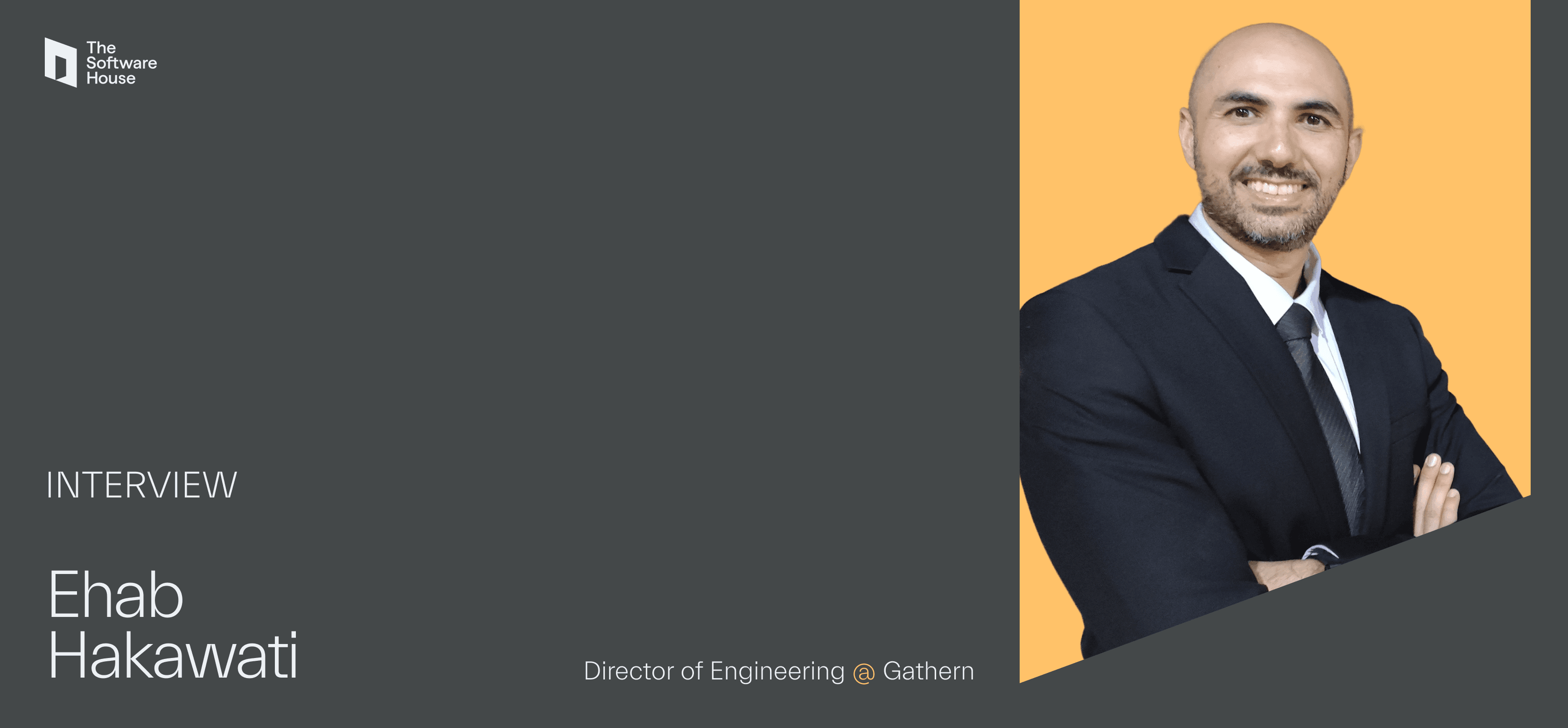
Ehab Hakawati, Director of Engineering at Gathern, shares how moving from an Instagram startup to an IPO-ready enterprise required ownership, resilience, and a Saudi-first mindset.
The Voices of Vision 2030 series highlights how Saudi tech leaders break away from the status quo to drive innovation, unlock growth, and help realize the Kingdom’s vision for a thriving digital future.
Scaling to a 44% share in Saudi alternative hospitality
For Gathern, scaling to millions of users wasn’t just about adding more servers. It meant empowering ownership-driven teams, building governance practices that could keep pace with Saudi Arabia’s fast-changing tourism sector, and, above all, embracing cloud-native systems that made this scale possible.
In this interview, Ehab:
Shows how Gathern empowers local hosts and their 72,000+ properties into the national tourism infrastructure for Vision 2030.
Shares how Gathern evolved from request-driven to domain-driven teams that own business outcomes end-to-end.,
Explains how cloud-native infrastructure and CI/CD pipelines enabled 65 monthly releases while sustaining 99.9% uptime with only 1 support tickets per 35,000 booked nights.
Technology Leadership Mindset
Last month, Gathern closed a $72M Series B funding round. Congratulations! It’s a strong testament to your relevance in the market and a great opportunity to scale even further. How does this shape your short- and long-term goals?
Ehab Hakawati: Thank you! Securing this funding was a long journey that took a lot of sweat and persistence, so it means a lot to us.
Gathern started back in 2016 with a very simple idea: chalet-only reservations. Step by step, we built on that foundation and expanded into the broader short-term rental domain in Saudi Arabia. Today, we cover the entire spectrum and have already become a major force in the region.
The funding gives us a bigger runway to strengthen that leadership locally and then scale internationally. Our short-term goal is to consolidate our position in Saudi Arabia, and our long-term vision is to expand into regional markets.
The Vision 2030 era is in full swing, and I know Gathern works closely toward its goals. If I’m not mistaken, the company was founded almost at the same time Vision 2030 was announced, right?
Ehab Hakawati: Yes, exactly. We’ve been aligned with it from the very beginning. Vision 2030 is built on the idea of “for Saudis, by Saudis,” and that spirit has shaped how I see technology’s role in Gathern’s business growth.
Over the course of your career, you moved from hands-on engineering to leading a large tech organization. How did that change your view of technology’s role in business growth, especially with Vision 2030 focusing so much on innovation?
Ehab Hakawati: I started almost 20 years ago as a junior engineer and worked across startups and large organizations. That experience taught me the journey from zero to scale and what it takes to move from proving an idea to building a sustainable enterprise.
In the beginning, a startup is about speed. You do not build heavy governance or robust foundations on day one; you prove the concept.
That is how we started Gathern. Listing chalets on Instagram and managing bookings manually. Once we saw real demand, we built our first software. Eventually, we reached a point where scaling required stronger foundations and raising capital.
From the start, we have said, “Trust is our currency.” This principle has been central to how we connect hosts and guests.
Every reservation is more than a transaction; it is an experience. Every payment to a host supports their family, and every trip helps travellers discover Saudi culture.
Today, with a maturing market, our systems are designed to absorb demand rather than fight it. A single campaign can create thousands of bookings in minutes with the confidence that our systems can handle the load.
Gathern's origin story is remarkable, from an Instagram page to a platform serving millions of users. As you scaled from startup to enterprise, which leadership habits did you have to evolve?
Ehab Hakawati: The one habit that has to be there from day one is ownership. Every team member should feel like a mini-founder, owning a part of the delivered value. This is your baby, now take care of it. When people have that mindset, they stop waiting for other teams and drive outcomes themselves.
When I joined Gathern, the tech team was more of a pickup group reacting to requests and chasing targets. We shifted that.
Now, our teams are structured around domain-driven development. For example, one team owns everything related to financial transactions, such as Mada, Tabby, and Tamara. They know the challenges under the hood, and they own solving them end to end.
This ownership evolution means our engineers do not just own tasks, they own outcomes.
They design retry mechanisms, build resilient platforms, monitor transactions, and verify every payout. By reshaping the teams this way, we strengthened the ownership culture and made technology invisible, an enabler that simply works for our users.
So ownership has always been the cornerstone of Gathern, but now it is more structured around domains. How has this shift to domain-driven ownership improved outcomes for both the teams and the product as a whole?
Ehab Hakawati: We shifted from seeing ourselves as pure technology specialists to becoming domain and business specialists. Technology is just a tool. What really matters is the business value we deliver to our customers.
Before, we had a pool of engineers working through a roadmap. Features for hosts, guests, or internal systems were passed around between engineers. That worked at a smaller scale, but as the team grew, it became inefficient and unsustainable.
Now we scale like we scale infrastructure: horizontally. We build a cross-functional team around every new business goal or value we want to deliver. Each team owns its domain end to end, whether it’s financial transactions, guest experience, or host operations. Designers, developers, and analysts work together, focused on outcomes instead of just tasks.
This structure speeds up decision-making, builds autonomy into our processes, and ensures that what we build directly serves users and the business.
I saw on your LinkedIn profile that you led the migration to a cloud-native infrastructure with CI/CD pipelines and achieved 99.9% uptime. That’s an impressive milestone! How do you balance delivery speed with platform reliability to ensure seamless travel experiences for hosts and guests?
Ehab Hakawati: Reliability is non-negotiable. You cannot build trust with users if your platform is unstable.
For us, technology should be invisible. When it works, nobody talks about it. When it fails, it becomes visible in the worst way. Our goal is to ensure people only notice the experience, not the technology behind it.
At Gathern, we have never dropped below our monthly target of 99.9% availability. For example, during one marketing campaign, our traffic multiplied six times and reservations spiked nine times within minutes. The platform automatically absorbed that surge, scaled automatically without manual intervention, and continued running smoothly. That’s the stability that makes technology an enabler instead of a barrier.
The difference came from moving to Kubernetes on top of AWS and adopting horizontally scalable data platforms such as AWS Aurora and MongoDB, which gave us both scalability and resilience.
On top of that, as you noticed, we built a robust CI/CD pipeline that ensures both speed and safety. Last month alone, we deployed 65 releases into production. Each release goes through automated checks: security scans, code quality validation, vulnerability testing, and a gradual canary rollout to 1%, 2%, 3% of users before reaching 100%. This pipeline allows us to ship fast without sacrificing reliability.
The results are clear: every 35,000 booked nights generates just 1 operational tickets.
That number shows how automation, reliability, and scalability create positive travel experiences for hosts and guests.
Looking ahead, what milestones will show you that Gathern is contributing meaningfully to Vision 2030’s goals, such as Tourism Development, Economic Diversification, or Local Economic Empowerment?
Ehab Hakawati: I'm glad you asked because this is an important point. At Gathern, we don’t just localize international experiences and push them into Saudi Arabia. We design experiences from the ground up for Saudi people, a major differentiator and a core way we contribute to Vision 2030.
Our approach is Arabic-first, mobile-first, and culture-first. That means every part of the user journey is crafted with local expectations in mind. For example, integrating with local payment providers like Mada, Tabby, and Tamara isn’t just a nice-to-have; it’s essential. If you don’t do it, you simply cannot succeed in this market.
International players often just change the language of their app and think that’s enough. But it doesn’t work here.
Vision 2030 is about building for Saudi Arabia by Saudis, and that’s exactly what we do: create tailored, trusted experiences that empower local hosts, serve travellers confidently, and strengthen the Saudi tourism ecosystem.
How does that translate to attracting and supporting international tourists who want to experience Saudi Arabia?
Ehab Hakawati: Vision 2030 places tourism at the heart of Saudi Arabia’s future, and we see Gathern as a key enabler of that mission.
We are not just digitalizing the booking process, we are perfecting it to a level where hosts can welcome travelers with pride. That means certifying hosts, ensuring quality standards, and creating experiences that work for both local and global travellers.
To make Saudi stays visible and accessible worldwide, we partner with international platforms such as Trip.com. Through these partnerships, travellers abroad can discover and book Saudi accommodations directly, while Gathern manages the local experience and ensures it meets cultural and service expectations.
This way, we help connect Saudi hosts to global demand and make the Kingdom a more attractive international tourism destination.
Talent & Culture
Many Saudi companies are competing for top engineering talent. What approaches work for you to find and retain skilled people?
Ehab Hakawati: Finding and retaining top talent is one of the hardest challenges in Saudi Arabia because demand is high and competition is fierce.
At Gathern, we approach it in two ways.
First, we hire engineers globally while keeping a Saudi-first mindset. We have team members in Saudi Arabia, Serbia, Pakistan, and across Asia.
Second, remote work has become much easier after COVID, and with tools like Zoom, Google Meet, and Jira, it is simple to collaborate across borders and time zones.
Finally, we look for more than technical expertise. We hire for culture fit and ownership. We want people with vision who own outcomes and drive value for our users.
Moreover, I think that employee retention is just as important as hiring. People don’t usually leave for money; they leave because they don’t feel appreciated, they don’t like the leadership style, or they don’t believe in the mission.
To address that, we coach our leaders, invest in their management skills, and create an environment where employees feel heard. We also provide training and growth programs, and ensure our people see a future for themselves at Gathern. Listening, appreciation, and a clear purpose keep talent motivated and committed.
You have already said that ownership is a cornerstone of Gathern. How do you foster that in hybrid collaboration across geographies and teams?
Ehab Hakawati: We trust our people to the maximum, while also giving them the tools and visibility to track responsibilities and performance. That balance of trust and accountability ensures ownership is real, not just a slogan.
Of course, remote work has its challenges. We sometimes miss the human touch—body language, face-to-face energy, spontaneous interaction. But we work hard to bridge that gap, ensuring collaboration tools, communication habits, and shared values keep everyone connected to the bigger mission.
As companies scale, the demand for talent often grows faster than what can be built in-house. At what growth stage should a tech organization consider partnering with external software vendors for support?
Ehab Hakawati: External partners add value for side projects, like building an MVP or supporting a release that needs to go live without slowing down the roadmap.
Today, it’s easier than ever to find partners, but their role should be limited to quick wins and speeding up non-core tasks, not the foundation of your company.
You should never outsource your core business. Intellectual property and technology decisions must remain in-house.
Initial Public Offering & Growth Alignment
You’ve led Gathern’s Initial Public Offering (IPO) preparation. How do you align a technology roadmap with strategic milestones like investor readiness, regulatory compliance, and storytelling for the market?
Ehab Hakawati: Preparing for an IPO touches every part of the technology organization.
Investors want to see technology that works and can be trusted to scale, secure user data, and support the company’s growth story. That combination of resilience, compliance, and clarity gives the market confidence.
The priority is scalability. For example, we are preparing our systems to handle a 5x increase in traffic. That requires completely moving away from monolithic systems and building an infrastructure designed around resilience. Losing even a single transaction is not just about lost revenue; it means losing trust and market confidence, which is far more damaging.
The second is compliance and security. IPO due diligence requires us to meet strict standards. That includes ensuring all customer data is stored within Saudi Arabia, complying with SADAIA regulations, performing regular penetration testing, addressing vulnerabilities, and making sure databases and cloud infrastructure are locked down with the proper access controls and processes.
The third is reliability and visibility. Our engineering workflows, CI/CD pipelines, and database processes must be mature, documented, and repeatable. This ensures we can deploy securely, respond to incidents quickly, and demonstrate operational excellence to regulators and investors.
Future-Proofing for Vision 2030
Vision 2030 emphasizes innovation and global competitiveness. How can tech leaders in Saudi Arabia build platforms today that stay ahead of rising customer expectations and remain flexible for the future?
Ehab Hakawati: Ideas are everywhere. If you think of one, chances are a thousand others already have the same thought. What makes the difference is execution: how fast and how well you can bring that idea to life.
Saudi Arabia has the talent and the know-how. The challenge is not inventing something entirely new but executing it in a way that delivers real value for our people in this market
My advice to Saudi founders is simple: do not waste time copying what works elsewhere. Focus on what makes sense locally, and execute with precision. When you commit to that mindset, you are not just building technology. You are living it, day by day, until success follows.
Gathern is part of Saudi Arabia’s fast-growing tourism sector. As Vision 2030 targets 150 million visitors, how do you see the company’s role in shaping the travel experience in the Kingdom?
Ehab Hakawati: Hosting 150 million visitors cannot be done solely by hotels. Hotel capacity is limited and often expensive, so alternative accommodations are essential. This is where Gathern plays a critical role.
We expand the inventory of available rooms by enabling property owners to become licensed hosts through the Ministry of Tourism. That means anyone with a suitable property can contribute to the sector, welcoming guests into homes with unique stays beyond traditional hotels.
Our responsibility is to ensure these properties meet clear standards: cleaning, quality benchmarks, and fair pricing. We don’t allow arbitrary rates; each property is priced according to location and market range. This creates trust for both hosts and travelers.
By doing this, Gathern increases capacity and enriches the travel experience with authentic, local stays. It’s a way of scaling tourism sustainably while aligning with Vision 2030’s ambitious goals.
Beyond the economic impact, it also empowers local communities to share their culture and benefit directly from tourism.
General advice
Given everything we’ve discussed, including leadership, operations, and talent, what advice would you give to Saudi tech leaders who want to scale confidently in the Vision 2030 era?
Ehab Hakawati: My advice is simple: move fast, prove value, and keep building.
Saudi Arabia is a massive market, with room for everyone who acts decisively. Prove your concept, build momentum, and keep going.
At the same time, don’t get stuck thinking of technology as just learning a programming language. Technology is a tool, and the key is choosing the right tool for the right task. One size does not fit all. For example, some problems might be best solved with Java, others with entirely different technologies.
The leaders who scale successfully are those who move quickly, adapt wisely, and stay focused on delivering value rather than chasing trends.
Resources
Can you also recommend some learning resources for managers who want to explore the topic further?
Ehab Hakawati: I follow several Substack newsletters, and one that stands out is ByteByteGo. It offers excellent content on system design and explains concepts in a clear, practical way. This resource is valuable for managers because it helps bridge technical understanding with decision-making.
What’s next? 3 ways Saudi tech leaders can scale confidently in the Vision 2030 era
With Saudi Arabia’s tourism sector growing fast, Ehab Hakawati shares how engineering leaders scale platforms, empower teams, and deliver trust-driven experiences at global standards.
1. Put ownership at the core
Scaling only works when every engineer is like a mini-founder with clear accountability. Foster a domain-driven culture where teams own outcomes, not just tasks.
2. Localize to lead
Global players often copy-paste solutions, but Saudi startups win by building Arabic-first, mobile-first, culture-aware experiences. This is an edge that outsiders cannot replicate.
3. Vendors for speed, in-house for value
Bring in vendors for non-core initiatives or quick wins, though your core IP is best managed internally. External teams complement your roadmap, not define it.
Authors

Aleksandra Dąbrowska
A copywriter who believes that with a little bit of creativity and humour IT doesn't have to be boring. Addicted to Spotify, music festivals and discovering new bands. She likes low-cost travels, but her favourite destination is the armchair where she reads books and binge-watches shows with clever storytelling.

Arkadiusz Kowalski
When it comes to business, he strongly favors building long-lasting partnerships and value. Always enjoys meeting new people and coming up with creative ideas. In his free time, he is happy to chat about computer gaming, politics, and social sciences.