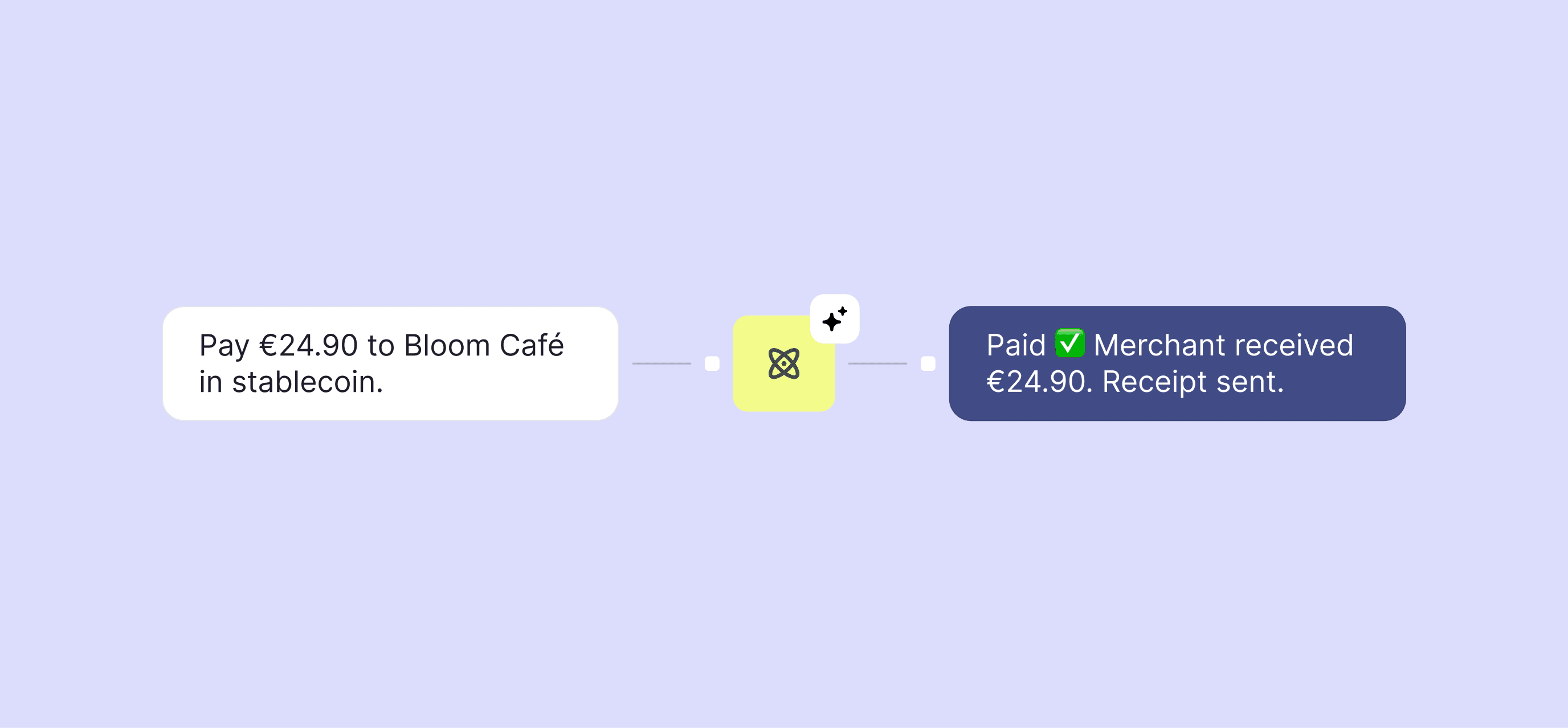

The Software House was asked to help in the development of a white-label MCP solution that would allow users to ask an AI chatbot to make payments for them in any online marketplace.
The project’s innovative nature combined with a tight deadline challenged the client to find highly experienced and adaptable developers that could supplement their internal team and speed up time-to-market.
Find out how fast we assembled the task force that helped deliver this innovative MCP-based payment solution on time.
Partnership goal:
→ To develop an MCP-based AI chatbot payment solution on schedule.
The client
A white-label blockchain-based solution that enables organizations to move, store, accept, and transfer both stablecoins and traditional currencies, with seamless conversion between the two.
At its core is a proprietary operating system that intelligently routes payments through a global orchestration layer, supporting operations across 40+ countries.
These solutions are commonly applied in areas such as international payroll, merchant settlements, and cross-border transfers.

INDUSTRY
Fintech

COUNTRY
US

SERVICE
AI development, Team augmentation
Challenge
The client wanted to make its payments tech even more innovative by developing a solution that makes it possible for individual users to pay for products and services via AI chatbots using cryptocurrencies. The user would type natural language commands and the AI agent would handle the entire transaction.
The client’s underlying technology would convert the digital currency into a fiat currency on its way to the merchant, allowing the user to pay with crypto for everything.
In addition to requiring technologically advanced solutions, the project posed some challenges:
Scalability
→ The solution needed to be ready to handle very heavy user traffic.
Time-to-market
→The client wanted to have a full developed MVP in several weeks.
Solution
The Software House responded to the pressing deadline by forming the initial team in just one week. It consisted of a solutions architect and a senior developer.
Due to the project’s nature, our developers would be required to pick up new tools and technologies on the go to solve various AI development challenges. Here’s what they used.
Technologies
– Model Context Protocol (MCP) – an open standard that standardises the way Large Language Models (LLMs) interact with external APIS or data sources.
– N8N – a no-code automation tool that can be used to create workflows to carry out complex AI-driven tasks.
– OpenAI – a suite of technologies from OpenAI, in particular their LLMs, for text generation and complex reasoning.
– Node.js with TypeScript
– AWS (EKS, Fargete)
– Kubernetes
– Terraform
:quality(75))
An example of a N8N workflow for an AI process
What is MCP?
You may be wondering how exactly MCP makes it possible for AI agents to communicate on its own with external tools. Here’s the gist of it:
1. MCP acts as a layer on top of the tool. It defines a common language that AI models can use to request actions or information.
2. When the model wants to perform actions, it consults with the MCP what it can do and how, sending a request to the MCP server.
3. MCP translates it into something the system understands (e.g. API call), executes the action and returns the result to the AI.
This mechanism allows AI agents to perform tasks on their own. Possible business cases may include areas as varied as personalized marketing campaigns, real-time business analytics or predictive maintenance.
That’s the theory. How did it go in practice?
Process
The development involved a couple phases.
1. Brainstorming/Roadmap workshop
To choose the best development direction, the client met up with our initial task force of two on-site for an intense 2-week session.
2. Proof of concept
Soon, we were able to come up with the first proof of concept of the payment solution that allowed for the transfer of stablecoin via a chat using a phone number.
As the work progressed, we scaled the team up to about 10 specialists, including 5 fullstack developers and 2 DevOps experts. All throughout, we continued the practice of holding onsite meetings with the client’s team at The Software House’s office in Gliwice.
3. Further development
Eventually, the MCP server for a payment solution grew to include 15 N8N workflows serving functions such as:
– registration,
– KYC,
– money transfers,
– wallet funding,
– automated support for edge cases.
4. Scaling
The MVP was developed in a way to make it easy to integrate it with various external tools and payment providers.
The Software House team ensured that the MCP could handle high traffic by replacing some N8N blocks with custom code.
Check similar case studies:
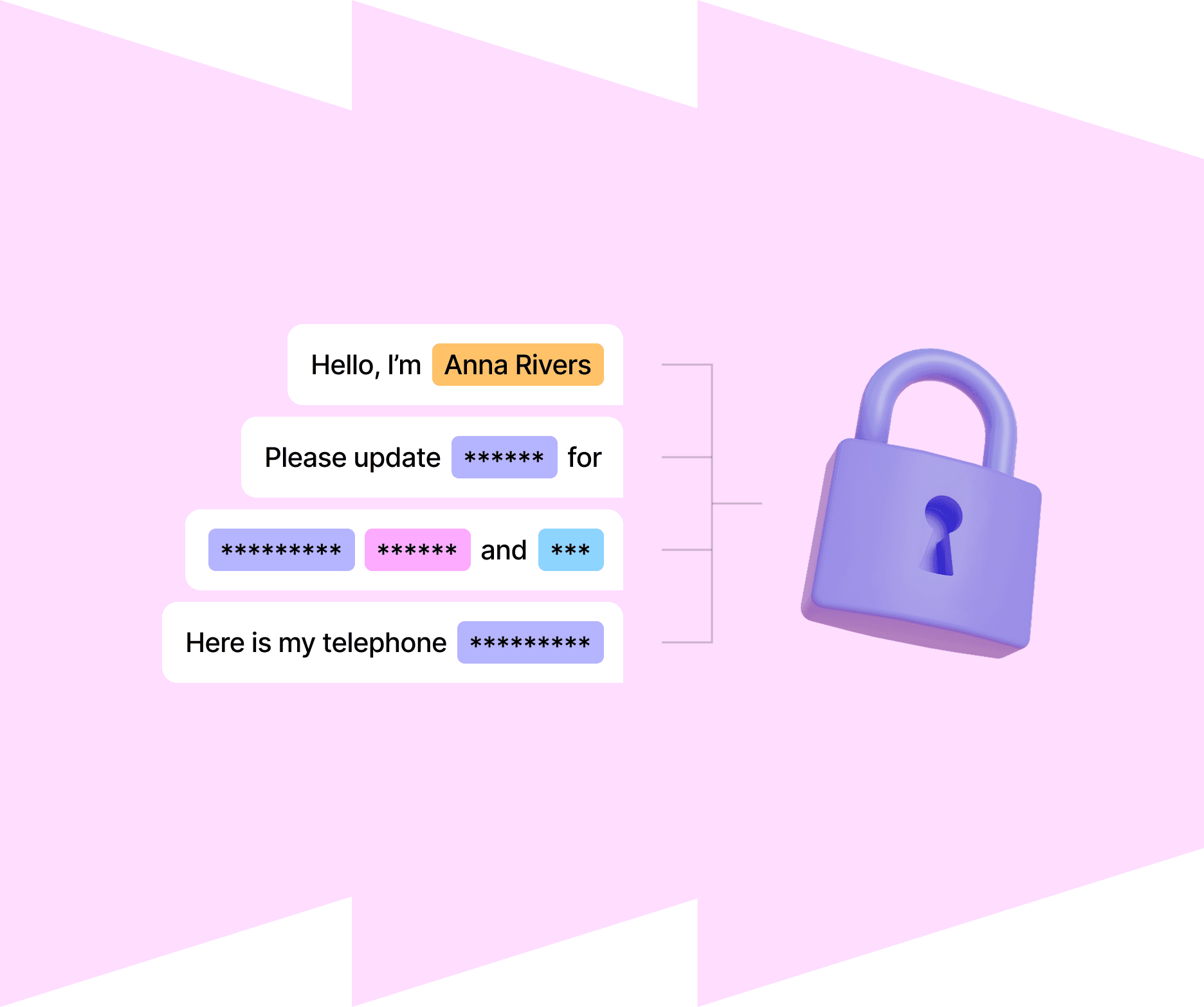
→ This client protected sensitive data for LLM app with a PII anonymization service
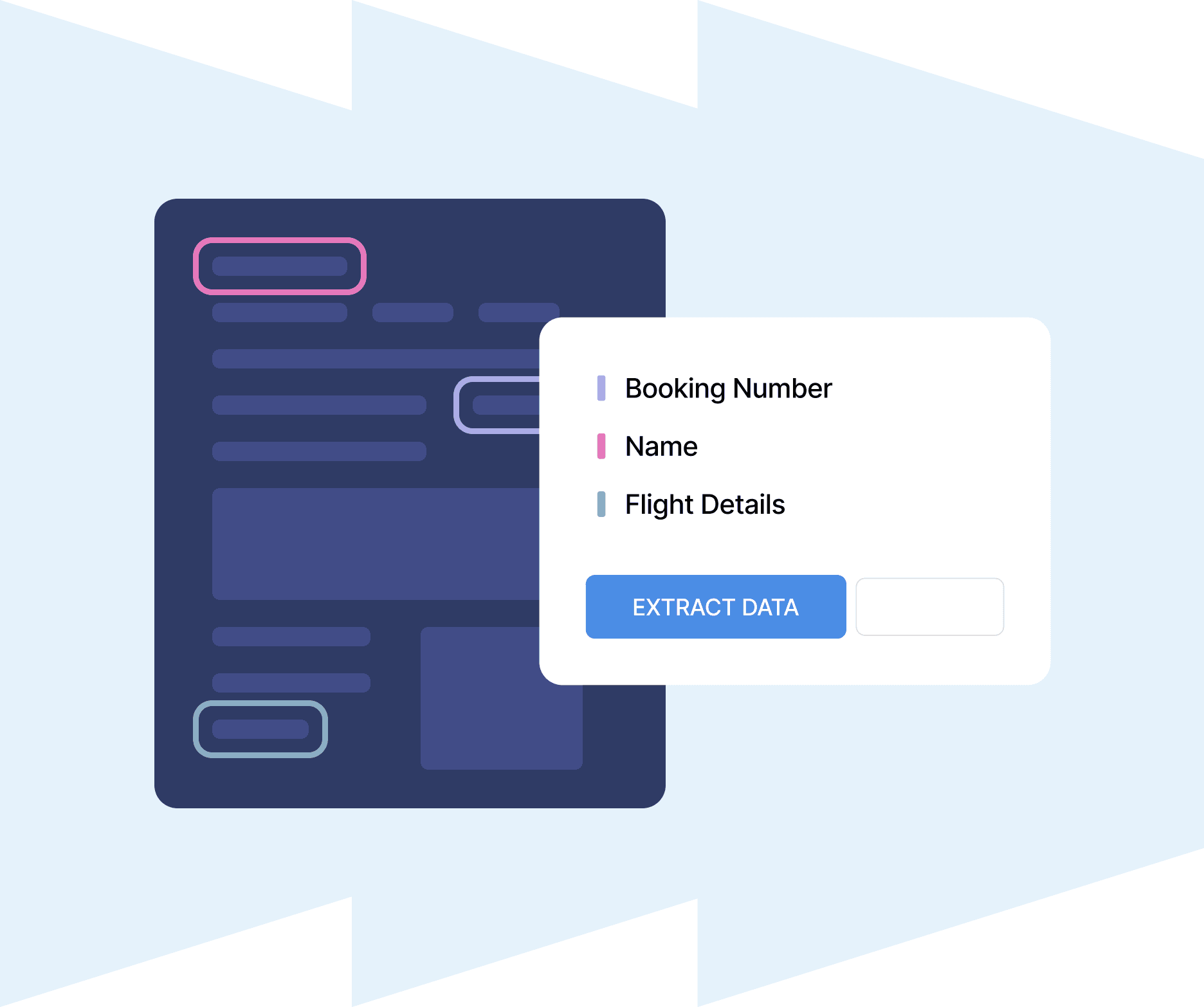
→ AI for travel document management cut all manual data work
→ xpate cut payout time for e-commerce merchants from 7 days to minutes
Outcome
The partnership between the client and The Software House resulted in the development of a highly innovative MCP-based server solution ready to enter the market:
→ Working MCP payment solution delivered in 3 months.
→ High integrability with AI agents ensured, making it ready to be offered as a white-label solution.
→ Scalability for high traffic built in, making sure it will stand up to challenges of commercial applications.