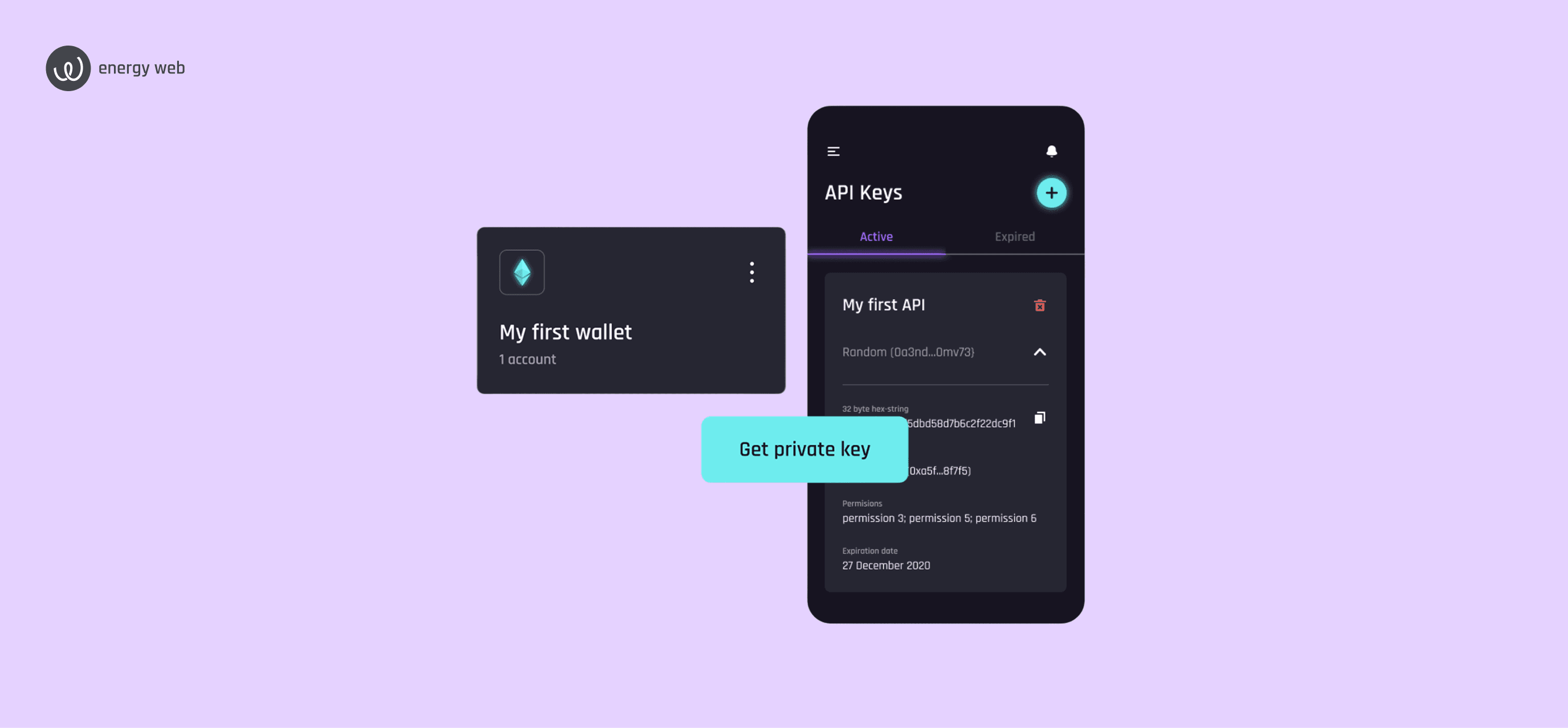

The Software House (TSH) helped Energy Web build a blockchain-based platform for managing the lifecycle of batteries from production to end-of-life recycling.
After its release, it soon became a standardized tool for a local Belgian government.
Partnership goal:
→ To build a blockchain-based platform that simplified battery lifecycle management and helped organizations meet EU compliance requirements.
Energy Web
Energy Web was a global nonprofit organization that built open-source blockchain technology for sustainable energy solutions. They worked with energy companies, grid operators, and governments to create decentralized systems that supported the transition to clean energy.

INDUSTRY
Energy and blockchain

COUNTRY
Switzerland

SERVICE PROVIDED
Full-stack development, DevOps, cloud engineering
Challenge
Energy Web had already proved themselves in the blockchain space with their Decentralized Operating System. But when they started working on EasyBat, a platform for battery lifecycle management, they hit a wall.
The project required deep blockchain expertise combined with frontend and backend development skills. They needed developers who could work in a complex and demanding environment and deliver fast.
TSH started by helping with DevOps work on Energy Web's existing technology suite.
The developers handled the complexity well enough that Energy Web decided to bring them in from day one on EasyBat.
1. Complex blockchain development requirements
Building on blockchain added layers of complexity to standard web development. Simple tasks like designing forms became complicated when constant two-way communication between a buyer and a seller was needed. Every transaction required confirmation from both parties before the form could be sent.
The UI had to hide this complexity from users. Nobody wanted to think about blockchain handshakes when they were registering a battery. The challenge was making the technical infrastructure invisible while keeping the user experience smooth.
2. Meeting EU compliance and government standards
The EU Battery Directive required member countries to track batteries throughout their lifecycle. In Belgium, registering a customer-owned battery meant collecting mountains of paperwork.
Energy Web needed a solution that would satisfy government requirements while making the process simple for manufacturers, distributors, and battery owners.
The platform also had to work with Bebat, Belgium's battery compliance scheme, which monitored legal takeback obligations for battery manufacturers. This meant building in detailed tracking for technical specifications, chemistry, weight, and modules throughout the battery's life.
Key challenges
To build a blockchain-based platform that handled complex transactions while maintaining a simple user experience
To create a system that met EU compliance requirements and government standards for battery lifecycle tracking
To implement infrastructure that could scale with growing data and user needs
To deliver a working prototype quickly enough to show existing and potential clients
The stakes
The European Commission's new Battery Regulation made battery passports mandatory for all batteries sold in the EU. Energy Web was building exactly what the market needed, but timing mattered. If they couldn't deliver a working solution quickly, other companies would fill the gap.
Solution
TSH brought in a team that could handle full-stack development. The project needed Node developers who understood blockchain, cloud engineers who could build scalable infrastructure, and a full-stack developer who could connect everything.
The team used AWS EC2 to store a modified OpenEthereum blockchain app in Docker containers. This setup made it easy to scale storage and spin up new instances when needed.
They added Terraform and Ansible to handle infrastructure as code, which streamlined configuration and deployment.
:quality(75))
Energy Web platform
Building the blockchain architecture
The platform ran on Energy Web's Decentralized Operating System, which used blockchain to create digital twins of physical batteries. Each battery got a digital passport that tracked it from manufacturing through operation to end-of-life disposal or recycling.
The system connected manufacturers, distributors, installers, and certification organizations. They could all issue and verify transactions without a central authority controlling the data. This decentralization meant no single point of failure and better transparency across the supply chain.
Simplifying the user experience
The frontend hid the blockchain complexity. Users saw simple forms and straightforward workflows. Behind the scenes, the platform handled identity management through EW Switchboard, which managed decentralized identities and their associated assets, roles, and permissions.
The interface needed to work for different user types: battery owners registering their equipment, manufacturers reporting specifications, and operators like Bebat monitoring compliance data. Each group got the information they needed without seeing unnecessary technical details
Technologies
Node.js, AWS (EC2), Docker, Terraform, Ansible, Kubernetes, Ethereum, Blockscout, Nexus Sonatype, Energy Web Decentralized Operating System, EW Switchboard
Process
Team composition
TSH assembled a specialized team for the project:
2 Node developers with blockchain experience
1 full-stack developer
Cloud engineers for infrastructure work
The team worked directly with Energy Web's CTO to make decisions quickly and adjust to new requirements without waiting for approval chains.
Fast prototype to working product
TSH delivered a clickable prototype in under 3 weeks. This speed let Energy Web show the platform to existing and potential clients while development continued. The prototype proved the concept worked and gave the team real feedback to refine the product.
Infrastructure and scaling
The cloud infrastructure needed to handle growing data as more batteries entered the system. Using Docker containers on AWS EC2 made scaling straightforward. When the platform needed more storage or processing power, the team could add resources without rebuilding the core architecture.
Terraform and Ansible automated much of the infrastructure management. This automation reduced manual configuration work and made deployments more reliable. The team could focus on building features instead of managing servers.
"We got the feeling that our goals are shared and that we're all working towards a common objective."
Micha Roon
Chief Technology Officer
Outcome
The final product, called EasyBat, proved to be in demand in some European markets. A local government in Belgium selected it as the main solution for battery asset management.
→ Energy Web released a working prototype in under 3 weeks
→ The platform satisfied EU Battery Directive compliance requirements and simplified battery registration for manufacturers, distributors, and owners
→ Energy Web also set-up a scalable blockchain infrastructure that it continued to build upon